
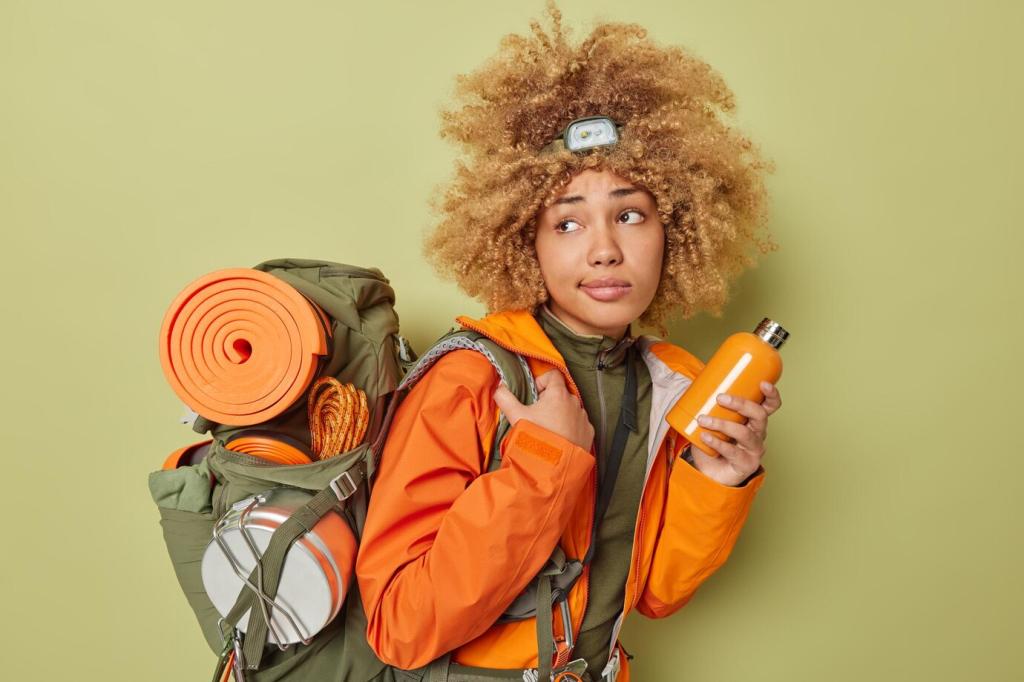



Chosen theme: Nutrition and Hydration Tips for Seasonal Hiking. Step onto every trail confident, energized, and hydrated with practical, season-savvy strategies, relatable stories, and simple checklists. Share your own tips and subscribe for ongoing guidance tailored to shifting weather and terrain.

Pre-Hike Hydration Ritual

Aim for about 500 milliliters of water two hours before your hike, plus a small salty snack to prime hydration. Add 200–300 milliliters thirty minutes pre-start. This gentle ramp helps you begin euhydrated without bathroom sprints or stomach slosh.

Carbs for Rolling Climbs

Plan 30–45 grams of carbohydrates per hour during easy spring hikes. Think dates, fig bars, orange slices, or pretzels for steady energy. Wet, sticky trails demand extra focus and fuel, so snack before you feel hunger creeping in.

Hydration Math for Hot Trails

In summer, many hikers need roughly 0.5–1.0 liters per hour, adjusted by effort, shade, and altitude. Weigh before and after a training hike; one kilogram lost often equals about one liter. Sip steadily every ten to fifteen minutes to stay ahead.

Electrolytes That Actually Work

Replace 300–600 milligrams of sodium per hour on hot, sweaty days—more if you see salty streaks on clothing. Use tablets, mixes, or foods like salted nuts and brothy sips. Balance matters: avoid overdrinking plain water and risking dilution.

Cooling Tactics to Support Hydration

Pre-chill bottles, freeze a half-filled soft flask, and wrap a lightweight bandana around your neck at sunny breaks. Start early, take shade-centric rests, and snack salty. Cooling lowers perceived exertion, helping you drink and absorb fluids without gut distress.

Autumn Endurance: Crisp Air, Steady Energy, Confident Miles

Slow Energy for Long Ridgelines

Aim for 200–300 calories per hour with a mix of carbohydrates, fats, and protein for stability. Try an apple with sharp cheddar, nut butter wraps with honey, or trail mix. Balanced foods smooth energy and reduce sudden hunger dips.

Hydration When the Air Feels Dry

Cool, low-humidity air can quietly increase respiratory water loss. Many hikers still need 0.4–0.7 liters per hour. Warm tea or lightly flavored water encourages sipping. Rotate a lightly salted drink to maintain balance without overwhelming your palate.

Winter Wisdom: Warm Fluids and Calorie-Dense Fuel

Carry an insulated bottle or small thermos with warm, lightly salted tea or broth. Sip 200–300 milliliters every thirty to forty minutes, even when you do not feel thirsty. Store bottles upside down so lids freeze last in bitter cold.

Winter Wisdom: Warm Fluids and Calorie-Dense Fuel

In winter, many hikers benefit from 300–400 calories per hour. Choose chocolate, nut butters, cheese, and oat bars that stay palatable in cold. Keep snacks in an inner pocket to prevent freezing and to encourage frequent, easy bites.

Electrolyte Balance: Prevent Cramps, Fog, and Fatigue

Track body mass before and after a one-hour training hike in similar conditions, adjusting for any fluid consumed. Salty streaks, stinging eyes, and gritty skin suggest higher sodium loss. Many hikers land between 300–800 milligrams sodium per hour in heat.

Electrolyte Balance: Prevent Cramps, Fog, and Fatigue

Carry one bottle with electrolytes and one with plain water to match changing terrain and temperature. Keep concentrations moderate to avoid stomach upset. A simple cue: your drink should taste pleasantly salty, not syrupy or overwhelmingly strong.

Plan, Pack, Practice: Turn Tips Into Reliable Habits

Three tasks the day before: portion snacks, mix electrolytes, and chill bottles. Two hours pre-start: drink about 500 milliliters. One last step at the trailhead: pack a quick-access snack pocket so fueling happens without stopping or forgetting.

Community Corner: Share Your Seasonal Fueling Wins

What drink do you trust most during a scorching summer climb—lightly salted water, electrolyte mix, or homemade citrus tea? Tell us how you measure success and what small tweaks made the biggest difference for your performance.

Community Corner: Share Your Seasonal Fueling Wins

Track intake, sweat cues, and energy for four hikes in varying weather. Note carb grams per hour and sodium targets. Share your findings, tag us, and subscribe to receive a template that turns observations into confident, repeatable habits.
Polinaravexononex
Privacy Overview

This website uses cookies so that we can provide you with the best user experience possible. Cookie information is stored in your browser and performs functions such as recognising you when you return to our website and helping our team to understand which sections of the website you find most interesting and useful.